Tuesday, November 22, 2011

Thanksgiving -- Reflection, Gratitude, and Blessings


Thanksgiving is a time for reflection -- a time to hold onto that hug a little longer-- to sit quietly and take in everything around you--

The first Thanksgiving in 1621 was a celebration of the first successful harvest in the new world. The pilgrims wanted to give thanks to the Wampanoag Indians since they taught them how to grow and harvest, ensuring their health and well-being. In these early days of celebrating, the Native Americans travelled over two days to arrive at this week long Thanksgiving event and accepted the fruits of the great harvest.

In 1863, President Lincoln designated a day in November for all the colonies to celebrate Thanksgiving at the same time. Today, we continue to celebrate Thanksgiving on the fourth Thursday of November with bountiful food in the company of family and friends.

We challenge you to start a "gratitude" journal. Nothing elaborate, just one or two words written down each day. Next Thanksgiving, open this book and relive the year. This will be your Thanksgiving gift to yourself. You will realize how rich your life is and how it will continue to be, when shared with your loved ones.

The Queen of Hearts has been humbled this year by her overwhelming success and wants to thank each of you for your patronage and continued support of our wonderful dealer-merchants. Our "gratitude" book is overflowing.

Happy Thanksgiving and may you and your family be blessed in every aspect of life.


Thursday, October 27, 2011

Burlap is Taking the Home Décor World by Storm


Burlap is showing up all over the place . . . in design magazines, in high end furniture stores and mainly at the Queen of Hearts Antiques & Interiors.

Have you ever wondered about burlap? Where it comes from? What was it originally used for? How many uses can it have? Well, strap on your burlap seatbelt and let's take a history tour of BURLAP.


Burlap is made from the fibers of a jute plant. It is an important export from India and Pakistan. Originally is was used in small quantities as rope and paper in India. The English traders saw its potential and began to export large quantities. While the majority of the jute is produced in India, Bangladesh (eastern Pakistan), China, Myanmar, Brazil and Thailand also export jute. The people of India discovered that burlap on the backs of rugs and carpets help protect the more delicate and valuable wool yarns.


There are many reasons that burlap has been so popular over the years. Burlap is extremely durable, hard to tear and is weather resistant. It can be dried many times once wet and still maintain its integrity. It is available in many weights, widths and forms. It can be dyed, sewn and even laminated. Hands down it is a very versatile fabric.

Burlap is considered a “breathable” fabric. When used outside as erosion control, it will over time deteriorate. Although it helps to protect young trees and plants from wind, prevents erosion, and is used as a casing for shipping wool, it also has a great presence in the furniture and carpet industry. It has been used for years as strapping for sofas and chairs and as backing for carpets.

This jute product is resistant to condensation. There are endless products that are shipped in burlap bags – coffee, grains, beans, and potatoes.
Burlap is considered a “green” product and has become very popular in the design world. Handbags and shoes, casual hats, and home furnishings are some of the areas that are sporting jute.

Please note the many repurposed uses for burlap. It has a big presence in the home accessory and design arena. These photos are from merchandise located at the Queen of Hearts Antiques & Interiors – Alpharetta, Buford and Marietta.


Wednesday, October 12, 2011

History of Blue Willow China


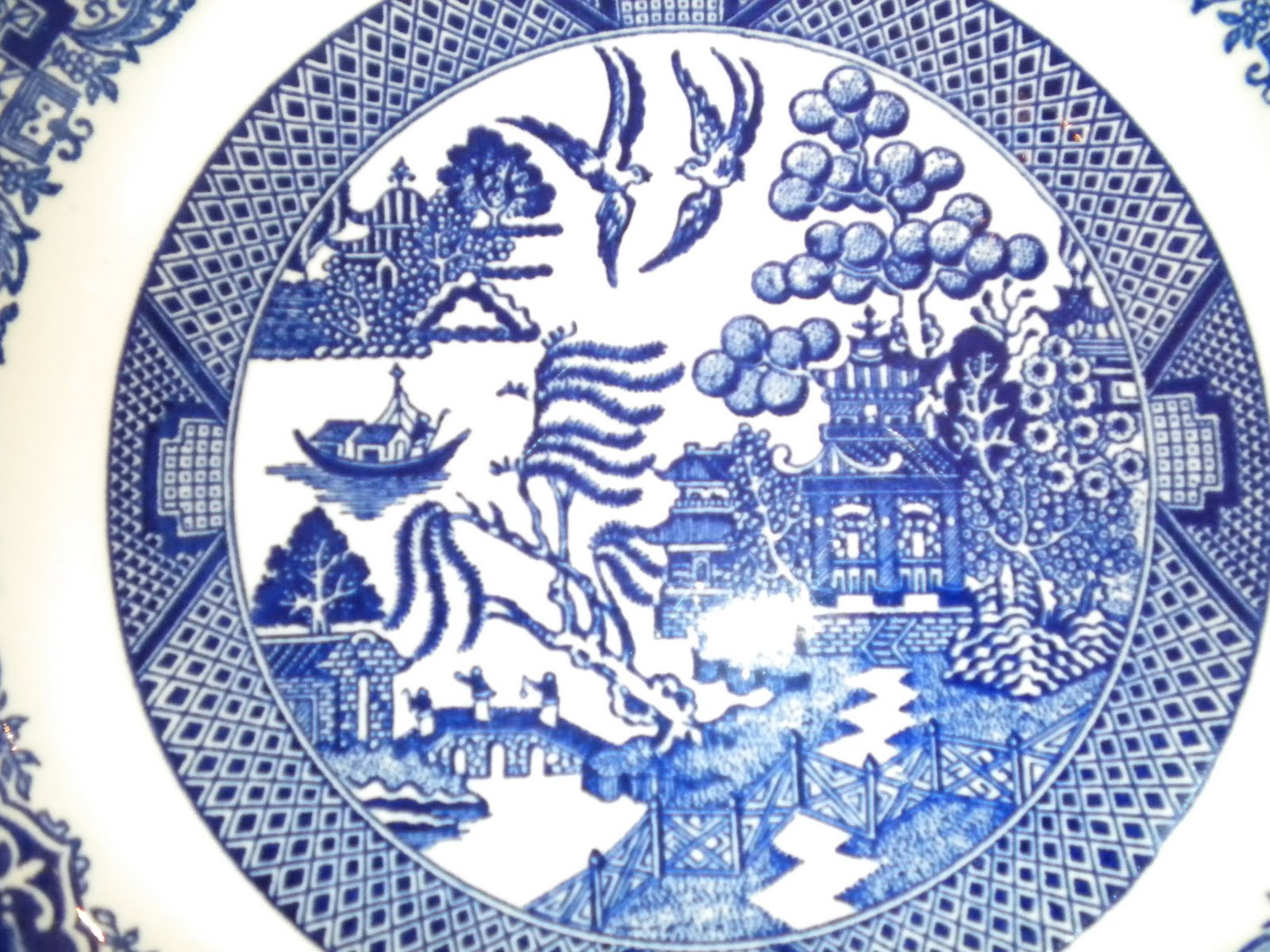
This particular china pattern has a mystery concerning its origin. Some say this wonderfully beautiful transfer ware china stems from a legend told in China more than a thousand years ago. It is believed that all the original Willow Pattern plates were destroyed by the Manchu rulers in China after they discovered that members of the illegal Hung Society defied them. The blue and white design is said to have been smuggled into England in the 19th Century and reintroduced back into China in the 19th Century.

No matter where or when this pattern appeared, no one can deny that this is one of the most recognizable china patterns in the world. The romantic fable is one that involves a wealthy Mandarin with a beautiful daughter. She fell in love with her father's humble accounting assistant which did not make her father happy. (It was inappropriate for them to marry due to their difference in social classes). The father built a high fence around his house to keep them apart. The father planned the marriage of his daughter to a Duke. The Duke arrived by a boat to wed his bride and brought with him a gift box full of jewels. The day of the wedding was set when the blossom fell from the willow tree.

The night before the planned wedding, the accounting assistant dressed as a servant and entered the palace unnoticed. As the “bride” and the servant/accounting assistant escaped with Duke's jewels, the father chased them over a bridge with a whip in hand. The lovers used the Duke's ship and sailed to a secluded island where they lived happily for many years. The Duke eventually figured out where his bride was and sent soldiers that captured the lovers and put them to death. The Gods were moved by this, transformed the lovers into a pair of doves. (Early willow pattern plates do not have the doves and therefore this is believed to have been added to the tale at a later date).

There is a poem called “Old Poem” that narrates the markings on the blue willow china:

Two birds flying high,
A chinese vessel, sailing by.
A bridge with three men, sometimes four,
A willow tree, hanging o'er.
A Chinese temple, there it stands,
Built upon the river sands.
An apple tree, with apples on,
A crooked fence to end my song.

Monday, August 8, 2011

What is Transferware?

It is a type of pottery and porcelain that uses a copper plate that has been engraved with a desired pattern. The color to be used was rubbed into the lines of the warmed plate, wiped of the excess and pressed onto a wet piece of specially made tissue paper. This tissue was then placed onto the vessel (plates, cups, saucers) and rubbed down by women called "Transferers." These women were expected to place the patterned tissue correctly, joining the seams of borders and designs and for applying the back stamp.

Transferware helped manufacturers produce very pretty pottery and porcelains quickly and less expensively than the previously hand painted pieces.

Next time you see a piece of Transferware, pick it up — look for the seams and notice how some line up perfectly and some are just a tad off. You might also notice the border running off the edge. Each piece is only as good as the Transferer — all hand applied one plate, cup or saucer at a time.


What type of Transferware are you buying?

Usually each piece of Transferware tells a story. By looking at the back stamp, a collector can check the pattern name, the initials or name of the maker and sometimes the name of the town where the factory is located. Sometimes there are no back stamps and only the Stilt marks are showing — these are three little dots in the glaze that held the triangular spur pieces and separated the plates in the kiln.

Why does the color blue seem to be used so frequently in Transferware?

Blue comes from cobalt and was the only color at first that would survive the high temperature of the glaze process. The rich blue color is associated with famous historical plates and also in the early Flow Blue. Blue Willow is one of the most popular patterns of transferware. It was initally designed by the famous Thomas Minton around 1790.

Why does some of the blue transferware look blurred?


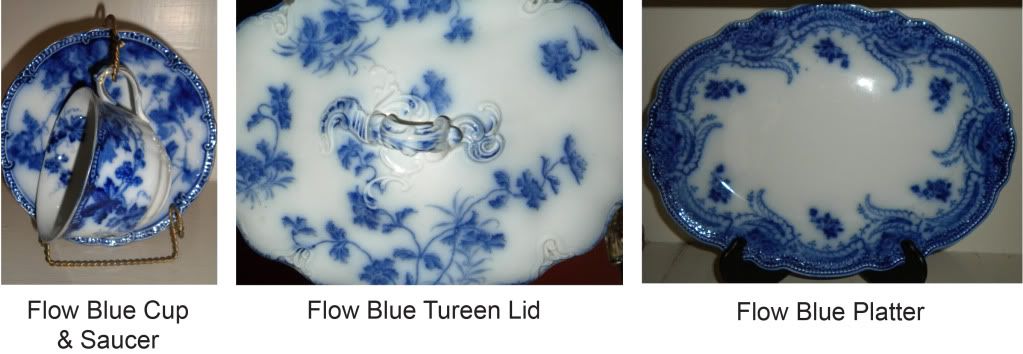
This blurred "look" is actually called Flow Blue. In 1545 in Saxony, a potter named Schurer used cobalt oxide and noticed that this blue soaked into the porous ware and blurred a bit in the glazing process. In 1820 it was discovered that the blue would "flow" by adding lime or chloride of ammonia to the sagger while glazing. The blurring covered printing faults and stiltmarks. When cobalt is initially applied it is brown and only turns blue in the firing process. Some think that Flow Blue china was a mistake and it eventually become a collectors item. This is not true — it was a deliberate process that is highly sought after by collectors.

Stay tuned for more posts on pottery, porcelains and the history of Blue Willow china.

Friday, July 1, 2011

Celebrate the 4th with a treasure hunt!

Every year on the 4th of July, our nation gathers to celebrate our Independence. Whether you’re participating in the Peachtree Road Race, cooking out with friends and family or taking in a fireworks show, make sure your plans this year include a trip to the Queen!
All three of our locations (Alpharetta, Buford and Marietta) will be open from 10 a.m. – 6 p.m. on Monday. To honor our country, 13 hats with flags (for the original 13 colonies) will be placed around each store for customers to find and redeem for a $20 Queen gift certificate.

Take a break from the heat and spend a cool day getting some hot deals at the Queen of Hearts!

At the Alpharetta location, we’ll also have hot dogs and live music!

This year, stop by and celebrate our great nation with us at the Queen.

Saturday, June 4, 2011

A Room Fit For A Queen

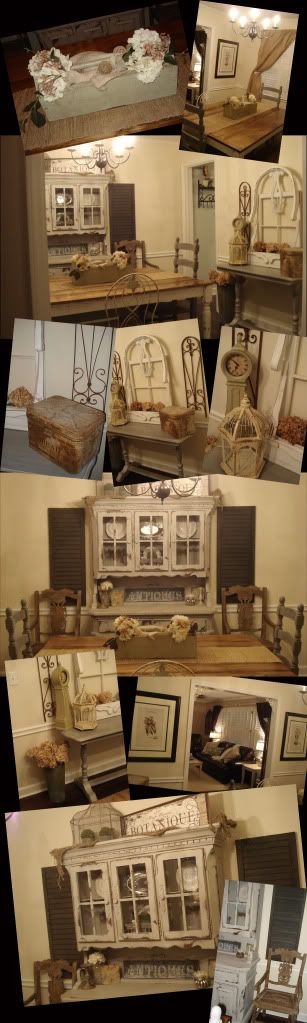
Ever walked around the Queen and thought you could decorate a whole room or house from items here?

One of our lovely customers, Lauren Harris, sent in photos of her dining room, decorated almost entirely with pieces from the Queen (all except the table). How gorgeous are these?


What a beautiful job of decorating! Thanks so much to Lauren for sharing these wonderful photos!

She is a 26-year-old newlywed who lives in Buckhead, Ga., and teaches Special Education in Alpharetta. Lauren says she discovered the Queen of Hearts in Alpharetta about 2 months ago and can't get enough — visiting about once a week, even if just to browse. What’s her goal? To have her own booth at the Queen!

Wednesday, May 11, 2011

No Longer Bound at the Queen

Have you heard about No Longer Bound? It is an organization helping men aged 18 and over recover from addiction though a 10-month, faith-based regeneration program. The purpose of the regeneration program is to provide an opportunity for the men at NLB to learn to take responsibility for their own recovery and adopt a whole lifestyle change.

The organization has greenhouses, a woodworking shop, a print shop, an auto shop, and a thrift shop that help support the program. A 501(c)3 organization, all donations are tax-deductible.

Come to the Alpharetta Queen on May 20-22 (Friday, Saturday and Sunday) and meet the young men who run the greenhouses at No Longer Bound. They will be selling all types of plants grown in their greenhouses. They will be at the Alpharetta Queen every third weekend beginning this month.

All purchases will benefit this wonderful and much needed program. For more information, go to www.nolongerbound.com or visit them on Facebook.
No Longer Bound has also been competing in the Chase Community Giving Contest on Facebook. During the first round, they finished in the top 100 and will receive $25K. Round two voting will take place May 19 through May 26, and NLB will be competing against the top 100 for $500K. If they win, they plan to build a new dorm, which will allow them to help up to 70 percent more men each year. Click here to find out how you can help No Longer Bound in round two.